
Picking an agentic AI framework isn’t really a “which is best” question. It’s a “which agent pattern are you actually building?” question. Teams that get that order wrong tend to discover the mistake six months later — usually when the framework they chose for one pattern is being bent against three others it wasn’t designed for.
This guide flips the usual deep-dive structure on its head. Instead of marching through various frameworks and asking which one wins, it organizes around the 5 dominant agent patterns that show up in real production systems today, and the framework that was built to solve each one.
By the end of it, the framework choice should fall out of the pattern you’re building — not the other way around.
The common patterns and their winning frameworks, briefly:
- Stateful task agents — durable, branching, recoverable workflows. → LangGraph
- Role-based multi-agent crews — multiple specialized agents on a shared goal. → CrewAI
- Conversational multi-agent systems — agents that talk to each other and converge. → AutoGen
- Tool-calling assistants — flatter assistants that use tools to complete user requests. → OpenAI Agents SDK
- Code-first lightweight agents — minimal agents that act by writing code. → Smolagents
Read this in the order: figure out which pattern fits, then jump to that section. The other frameworks aren’t wrong — they’re just answering different questions.
What is Agentic AI? Real Meaning
An agentic AI framework is software that gives a language model the ability to plan, take actions in the world through tools or APIs, observe results, and decide what to do next — repeated over multiple steps until a task is complete. The framework provides the loop, the state, the tool integration, the error handling, and (in the multi-agent case) the orchestration between specialized agents.
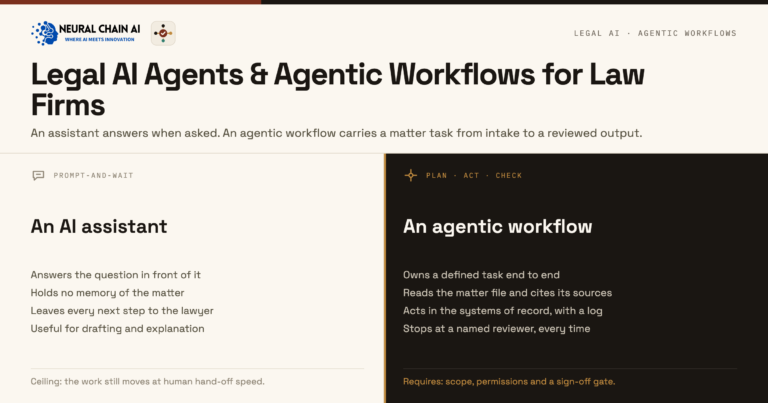
This is meaningfully different from a single LLM call wrapped in some retry logic. An agent decides; a script executes. An agent’s behavior emerges from the loop, not from the prompt alone.
The distinction matters because most teams who think they need a multi-agent framework actually need a structured workflow with a model in one or two steps. The most common production failure in 2026 isn’t picking the wrong framework — it’s reaching for an agent when a deterministic pipeline would have shipped two months earlier. Use these frameworks when the loop is the point. Not when you’ve been told agents are the future.
Agentic AI Frameworks: Quick Reference
| Pattern | Framework | Strengths | Where it falls short |
|---|---|---|---|
| Stateful task agents | LangGraph | Durable state, branching, recoverability, human-in-the-loop | Steeper conceptual ramp |
| Role-based multi-agent crews | CrewAI | Fast time-to-first-system, opinionated abstractions | Less control on complex flows |
| Conversational multi-agent | AutoGen (succeeded by Microsoft Agent Framework) | Flexible agent-to-agent patterns, dynamic groups | AutoGen is in maintenance mode; new builds start on Agent Framework 1.0 |
| Tool-calling assistants | OpenAI Agents SDK | Minimal, official, tightly integrated with OpenAI models | Tracing and defaults tuned for OpenAI models |
| Code-first lightweight agents | Smolagents (Hugging Face) | Tiny surface area, code-as-action paradigm, transparent | Less suitable for stateful or coordinated work |
Pattern 1: Stateful Task Agents – LangGraph
A stateful task agent runs a defined task over many steps, can pause and resume, branches based on intermediate results, and hands off to a human at checkpoints — surviving infrastructure restarts without losing context. Real examples: a research agent that gathers and synthesizes information over twenty steps, a contract review agent that pauses at every flagged clause, a customer-issue diagnosis agent that escalates to a human at a defined threshold.
Why LangGraph wins this pattern?
LangGraph models agents as directed graphs with explicit state. Nodes are functions, edges are transitions (sometimes conditional), and a single state object travels through the graph carrying everything the agent has seen and decided. State is checkpointable, which means agents can be paused, resumed, retried, or audited at any step. Human-in-the-loop is a first-class primitive, not a workaround. The library reached 1.0 and now ships on the 1.2.x line, so the graph and checkpoint APIs are stable enough to build against.
Where it falls short?
LangGraph’s conceptual surface is heavier than CrewAI’s. Engineers used to imperative scripting will fight the graph paradigm for the first few projects before it starts feeling natural. For genuinely simple agents — single-shot, no state worth preserving — it’s overkill.
Choose it when the task has more than three or four real steps, the agent needs to survive failure mid-run, or you need a human review checkpoint anywhere in the flow. For most production agentic AI systems, this is where the conversation should start.
Pattern 2: Role-based multi-agent crews – CrewAI
A role-based multi-agent crew is what most people picture when they hear “AI agents”: several specialized agents (a researcher, a writer, a critic, a fact-checker) collaborating on a shared goal, each with a defined role, scope, and toolset. The crew runs the orchestration; the agents do the work.
Why CrewAI wins this pattern?
It was built specifically for this. You declare agents with role/goal/backstory, declare tasks (what needs doing and which agent owns it), and declare a crew (the orchestration layer that runs them). The framework handles delegation, output passing, and shared memory across agents. From pip install to a running multi-agent system is often under an hour — unusual in this category, and a meaningful advantage when you’re validating whether the multi-agent pattern even makes sense for your problem. CrewAI passed 1.0 and is now on the 1.15.x line.
Where it falls short?
Complex flows hit the abstractions hard. Custom retry policies, unusual delegation patterns, fine-grained control over the agent loop — CrewAI hides those by design, which is freeing for simple crews and frustrating for sophisticated ones. Teams who outgrow it typically migrate to LangGraph (for state-heavy flows) or AutoGen (for conversation-heavy flows).
Choose it when the multi-agent pattern is well-defined, the agents’ roles are clear, and you want a running system this week. Especially good for MVPs and proofs-of-concept.
Pattern 3: Conversational multi-agent – AutoGen
A conversational multi-agent system isn’t just multiple agents — it’s multiple agents that talk to each other, dynamically decide who speaks next, debate options, and reach consensus or escalation through the conversation itself. Real examples: a research panel where a writer, critic, and editor iterate on a draft until they converge; a coding session where a planner, coder, and tester argue about whether the implementation matches the spec; a financial analysis where a bull case and bear case challenge each other before producing a recommendation.
Why AutoGen wins this pattern?
AutoGen (from Microsoft Research) treats agent communication as the primary primitive. You define agents, give them tools and instructions, and AutoGen runs the conversation, selecting speakers dynamically based on configurable strategies, supporting group chats, hierarchical conversations, and hybrid human-and-agent groups. It’s more flexible than CrewAI in how agents coordinate. Microsoft has since folded this lineage into the Microsoft Agent Framework, which shipped 1.0 in April 2026; AutoGen and Semantic Kernel are both in maintenance mode now, so start new builds on Agent Framework and carry the same conversation patterns across.
Where it falls short?
The flexibility cuts both ways. AutoGen requires more setup and more careful design than CrewAI. Conversations can drift, loop, or fail to converge if the agent instructions aren’t tight. Debugging a misbehaving conversation is genuinely harder than debugging a deterministic graph.
Choose it when the value of the system comes from agents disagreeing, refining each other’s work, or dynamically routing the discussion — rather than executing a fixed pipeline.
Pattern 4: Tool-calling assistants -OpenAI Agents SDK
A tool-calling assistant is a (mostly) flat agent that responds to user requests by calling external tools — search, calendar, CRM, database, internal APIs — and returning structured outputs. Real examples: a sales assistant that drafts emails based on CRM lookups, an ops assistant that runs queries against internal dashboards, a customer support assistant that pulls from documentation and ticket history.
Why OpenAI Agents SDK wins this pattern?
Released in March 2025 as the production successor to the experimental Swarm project, and now on the 0.19.x line, the Agents SDK gives you a minimal, official, and tightly integrated way to build tool-calling agents on top of OpenAI models. Built-in tracing and evaluation, native handoff between agents, clean Python ergonomics. For teams already committed to the OpenAI ecosystem, it’s now the default choice, with less abstraction overhead than LangChain for the same job.
Where it falls short?
Model portability is better than it used to be. The SDK ships official LiteLLM and AnyLLM adapters, so Claude, Llama, or a local model can serve part of the workload. The defaults, tracing, and newer feature areas are still built around OpenAI models, and the agent abstractions remain less flexible than LangGraph’s for state-heavy or branching flows.
Choose it when the agent is mostly a tool-using assistant rather than a state-heavy planner, your stack runs on OpenAI models, and you want the lightest abstraction for the job.
Pattern 5: Code-first lightweight agents – Smolagents
A code-first lightweight agent acts by writing and executing code rather than by emitting structured tool calls through a predefined interface. Real examples: a data analysis agent that writes pandas code on the fly, a system administration agent that writes shell commands, a research agent that composes API calls dynamically based on intermediate findings.
Why Smolagents wins this pattern?
Smolagents (Hugging Face, v1.26.0 as of May 2026) takes a deliberately minimal approach: small surface area, transparent code, and a “code as action” paradigm, where agents reason by writing Python code rather than emitting structured tool calls. This often outperforms structured tool-calling on tasks requiring composition or chaining, because the LLM can naturally express “do X, then with that result do Y” as a small Python snippet rather than as a multi-turn tool-call sequence.
Where it falls short?
The code-execution model requires careful sandboxing, especially for production exposure to untrusted inputs. Smolagents supports sandboxed execution through Docker, E2B, Modal, and Blaxel, so pick one before you expose an agent to untrusted input. It’s also less suited to multi-agent coordination or long-horizon stateful tasks — those belong in LangGraph or AutoGen territory.
Choose it when the agent’s natural action surface is code (data work, scripting, dynamic API composition), you want minimal framework overhead, and you can manage the execution sandbox safely.
Agentic AI Frameworks: Few Honourable Mentions
A few frameworks worth knowing about, even though they didn’t make the top five:
- Google ADK, Google’s open-source agent framework, now GA at 2.0 with graph workflows and collaborative agents. Available in Python, TypeScript, Go, Java, and Kotlin.
- Mastra, a TypeScript-native agent framework for Node.js teams. Worth evaluating if your stack is JavaScript-first.
- Pydantic AI, strong type-safety and modern Python idioms; has agent primitives but isn’t agent-first the way LangGraph is.
- Semantic Kernel, Microsoft’s enterprise plugin-based framework, now in maintenance mode alongside AutoGen; its successor is the Microsoft Agent Framework.
- Phidata / Agno, data-aware agents with strong RAG and analytics primitives.
- Aider / OpenHands, vertical agent products focused specifically on coding agents. OpenHands is the project formerly named OpenDevin, now maintained by All Hands AI.
These categories will keep expanding through 2026. The five frameworks in the main list are the production-grade choices today; the honorable mentions are worth watching.
How to choose The Best Agentic AI Framework?
Look for answers to these important questions, particularly in this order:
1. Which agent pattern matches what you’re building?
Stateful and branching → LangGraph. Role-based crew → CrewAI. Conversational debate → AutoGen. Tool-using assistant → OpenAI Agents SDK. Code-as-action → Smolagents.
2. What’s your model and stack constraint?
OpenAI-only → OpenAI Agents SDK. Multi-provider → LangGraph or CrewAI (both ecosystems are model-agnostic). TypeScript-first → Mastra. .NET enterprise → Microsoft Agent Framework (the successor to Semantic Kernel).
3. How long-lived is the system?
Quick MVP, single pattern, ship it → CrewAI or OpenAI Agents SDK. Production system maintained for years, scope likely to grow → LangGraph.
The biggest mistake to avoid is choosing the framework before the pattern. Most production failures in agentic systems are downstream of a team picking a framework based on popularity, then discovering the pattern they actually need to build doesn’t fit the abstractions on offer.
Why most Agentic AI projects fail?
The framework choice gets disproportionate attention because it’s a visible decision early in the project. But across the teams shipping agentic systems in production today, three failure modes consistently beat “wrong framework” as the actual cause of stalled rollouts:
- Reaching for an agent when a workflow would have shipped: A scheduled job with three deterministic LLM calls solves more business problems than people admit. Agents introduce non-determinism, debugging difficulty, and infrastructure overhead. Build the workflow first; reach for an AI agent for business only when the loop is genuinely needed.
- No evaluation harness: A working demo with five test cases tells you nothing about behaviour on five thousand real inputs. Teams without continuous evaluation discover the regression after a customer reports it. Build the evaluation set before the agent.
- Treating the framework as the product: The framework is plumbing. The product is the agent’s behavior, reliability, and integration into the workflows people actually use. Teams that fall in love with their framework and over-invest in framework-specific patterns tend to underinvest in the evaluation, observability, and prompt-engineering work that actually determines whether the system ships.
The same observation applies to LLM frameworks more broadly — picking the right one is necessary, but rarely sufficient. The execution discipline matters more than the tool.
How NeuralChainAI helps teams ship agentic AI?
The agentic AI systems NeuralChainAI helps teams ship in production share one thing in common: the framework decision came second.
The first decision was naming the actual agent pattern — stateful task agent, role-based crew, conversational debate, tool-calling assistant, or code-first lightweight loop — and the framework fell out of that clarity.
Teams that approach it this way ship working agents in 8 to 12 weeks with structured evaluations from day one and a clean handoff to their internal engineers. Teams that pick the framework first usually rebuild within a year.
Our engagements are built around that order of operations — pattern first, framework second, evaluation harness in parallel — and they’re sized for companies that want production agents in months, not transformation programs that take quarters.
Which is The Right Agentic AI Framework?
The right agentic AI framework isn’t the one with the most stars on GitHub. It’s the one whose abstractions match the agent pattern you’re actually building.
- For stateful, branching, recoverable tasks: LangGraph
- For role-based crews shipping fast: CrewAI
- For conversational debate and dynamic coordination: AutoGen, and the Microsoft Agent Framework that succeeds it
- For OpenAI-stack tool-calling assistants: OpenAI Agents SDK
- For code-as-action lightweight agents: Smolagents
Pattern first. Framework second.
The teams that get that sequence right ship systems that scale. The teams that get it backwards rewrite their agents every six months.
Expect more agentic AI frameworks ahead. The landscape is fragmenting, not consolidating. Which means the real moat isn’t picking today’s best tool. It’s the evaluation discipline and pattern fluency that carry over to whatever comes next.
Which of these agentic AI frameworks is your team evaluating right now — and which agent pattern is the system actually built around?
Disclaimer: This article reflects the agentic AI framework landscape as of publication; capabilities, integrations, and ecosystem maturity evolve rapidly. Validate any framework against your own application’s requirements and evaluation benchmarks before committing to a long-term build.
Frequently asked questions
A list of common questions we get about Agentic AI Frameworks.